When Wounds Go Deeper Than the Skin: A Caregiver’s Guide to Bedsores and Burnout
- May 24, 2025
- 5 min read
Updated: Jun 24, 2025
“I didn’t know it could get this bad.”
Those were the first words Anna whispered when she called me. She was exhausted, scared, and ashamed.
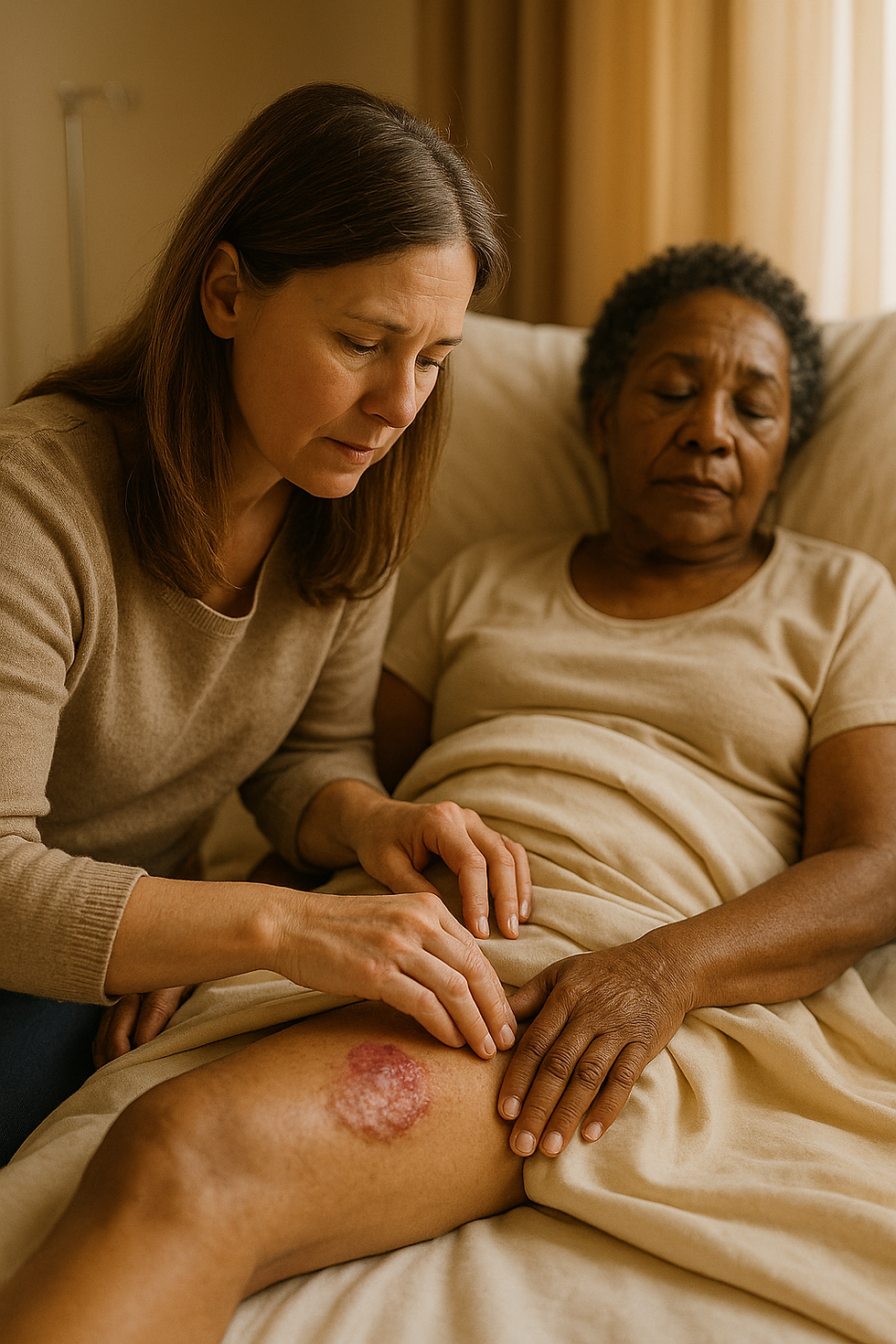
She had been caring for her mother at home for almost six months—balancing medications, mealtimes, and repositioning schedules. But one day she noticed a dark patch on her mother’s lower back. It wasn’t a bruise. It was a pressure ulcer—what most people know as a bedsore. And it had already begun to break the skin.
“I thought I was doing everything right,” she said. “But now I feel like I failed her.”
Anna hadn’t failed. She was just tired. Like so many caregivers, she was giving everything she had and still feeling like it wasn’t enough. And that’s where this conversation begins.
What Are Bedsores—And Why Do They Happen?
Bedsores (or pressure ulcers) form when prolonged pressure cuts off circulation to parts of the body—usually the tailbone, heels, elbows, or shoulder blades. Without blood flow, skin and tissue begin to break down.
They’re categorized into stages:
Stage 1: Red or discolored skin that doesn’t blanch (turn white) when touched.
Stage 2: Open wound or blister.
Stage 3: Deeper wound with fat exposed.
Stage 4: Muscle, tendon, or bone may be visible.
What’s heartbreaking is how preventable many of these wounds are—with time, knowledge, and help.
5 Care Strategies for Preventing and Treating Bedsores
Each of these strategies is grounded in clinical best practices and caregiving experience. While they may seem simple, they require consistency—and self-compassion. Here's how to approach them with both precision and grace.
1. Repositioning Every 1–2 Hours
Use pillows to offload pressure on high-risk areas. Even a slight change in body angle helps restore circulation. Turn the person gently, alternating between their back, left, and right sides if tolerated. Document your turning schedule if needed—consistency makes a difference. 👉 Body Positioning Wedge Pillow (Paid link)– Helps caregivers shift weight safely and support joints without straining the body.. Even a slight change in body angle helps restore circulation.
2. Skin Inspection and Hygiene
Check the skin daily—especially bony areas—for changes in color, texture, or temperature. Clean with gentle cleansers and pat dry—never rub. Moisture increases risk for sores, so manage incontinence carefully using skin barrier creams if needed. 👉 No-Rinse Perineal Cleanser Spray (Paid link)– A gentle option for immobile individuals that helps avoid moisture buildup and skin breakdown.—especially areas over bones. Look for redness, warmth, or softness. Keep skin clean and dry.
3. Supportive Surfaces Matter
The right mattress can make all the difference. Standard hospital beds often aren’t enough. Use a gel, memory foam, or alternating pressure surface that continuously shifts points of contact to relieve pressure. Pair with moisture-wicking bedding. 👉 Alternating Pressure Mattress System (Paid link)– Designed to reduce pressure points with continuous airflow changes, especially for long-term care situations. Consider gel or alternating pressure mattresses.
4. Nutrition Plays a Huge Role
Tissue breakdown is faster when the body is depleted. Ensure meals are rich in protein, vitamins A, C, and zinc. Hydration is also crucial for cellular healing. If appetite is low, consider shakes, soups, or small frequent meals. 👉 High-Protein Nutritional Shakes (Paid link) – Easy-to-digest and loaded with skin-supportive nutrients to encourage healing and energy. all promote skin healing. Malnutrition slows recovery dramatically.
5. Get Help So You Can Rest
Your well-being is a care strategy, too. When you're exhausted, things slip—because they must. Call in family, hire part-time help, or explore respite services. Taking a break isn’t selfish—it’s how you sustain your ability to care. 👉 Caregiver Respite Services – A national directory of short-term care options to give you time to rest or run errands, while your loved one stays safe and supported.—not from neglect but from sheer depletion.
Burnout Is a Wound, Too
Anna’s tears weren’t just about her mother’s wound—they were about her own.
Caregiver exhaustion builds slowly. It hides behind skipped meals, restless nights, and a quiet sense of resentment. Then it erupts in moments like this—when you blame yourself for what you missed.
But here’s what I told Anna: “You can’t heal someone else if you’re falling apart.”
Take breaks. Ask for help. Cry when you need to. Your loved one needs your strength—but not at the cost of your wellbeing.
Final Thoughts
Bedsores are visible. But the emotional wounds of caregiving often are not.
Learn what to look for. Use the tools that are available. And never be afraid to say, “I need help.” Because protecting someone else’s dignity should never mean sacrificing your own.
With care,
Rebecca Saavedra
Former Nurse | Educator
P.S. If you found this helpful, I invite you to subscribe to my newsletter below. You’ll receive thoughtful, practical insights like this—delivered straight to your inbox.
FAQ: Bedsores, Burnout, and Home Care
1. What causes pressure ulcers in elderly patients at home?
Bedsores (or pressure ulcers) are caused by prolonged pressure that limits blood flow to the skin. This usually happens in people who are immobile or have limited movement—especially over bony areas like the tailbone, hips, and heels.
2. How often should a bedridden patient be repositioned to prevent bedsores?
Experts recommend repositioning every 1–2 hours. Shifting body position helps restore circulation and reduces pressure buildup on vulnerable areas.
3. What are the early warning signs of a pressure ulcer?
Early signs include redness that doesn't fade when touched, warm or spongy skin, and discoloration in areas under pressure. If caught early (Stage 1), sores can often be reversed with proper care.
4. What is the best mattress to prevent bedsores?
Alternating pressure mattresses and gel cushions help reduce pressure points. These specialized surfaces continuously adjust contact points and are often recommended for long-term care.
5. Can malnutrition cause bedsores to get worse?
Yes. A lack of protein, zinc, and vitamins A and C slows wound healing. Proper nutrition is critical to support tissue repair and prevent skin breakdown.
6. What kind of cream is good for preventing pressure ulcers?
Barrier creams containing zinc oxide or dimethicone protect against moisture from sweat or incontinence, reducing the risk of skin breakdown.
7. How can caregivers prevent caregiver burnout while managing bedsores?
Preventing burnout requires rest, support, and practical tools. Hiring respite help, using positioning aids, and prioritizing caregiver self-care are essential to sustaining care.
8. Is it normal to feel guilty when a loved one gets a bedsore?
Yes—and it’s also common. Many caregivers feel guilt even when doing their best. Remember, pressure sores can develop quickly, and your effort still matters deeply.
9. What home remedies help heal stage 1 bedsores?
Frequent repositioning, clean and dry skin, hydration, and balanced nutrition are key. For minor sores, gentle cleansing and protective dressings may support healing.
10. Can emotional stress make caregiving mistakes more likely?
Absolutely. Chronic stress and sleep loss reduce concentration and decision-making. Supporting your own mental health is a protective strategy—not a luxury.
Affiliate Disclaimer:As an Amazon Associate, I earn from qualifying purchases. I only recommend products I believe in, and all links marked "(Paid link)" help support this blog at no additional cost to you.
Note: Before starting any supplement routine, consult your doctor or healthcare provider to ensure they’re appropriate for your specific medical needs. While I share science-backed, general wellness information, I’m not your personal physician. I don’t have access to your health history or prescriptions and cannot predict how supplements may interact with your current medications or conditions.
Disclaimer: These stories are inspired by real experiences in long-term care. Names and identifying details have been changed to protect privacy. In some cases, elements may be composite to reflect common clinical patterns and emphasize educational points. The intent is to inform and advocate, not to assign blame or disclose personal information.


Comments